

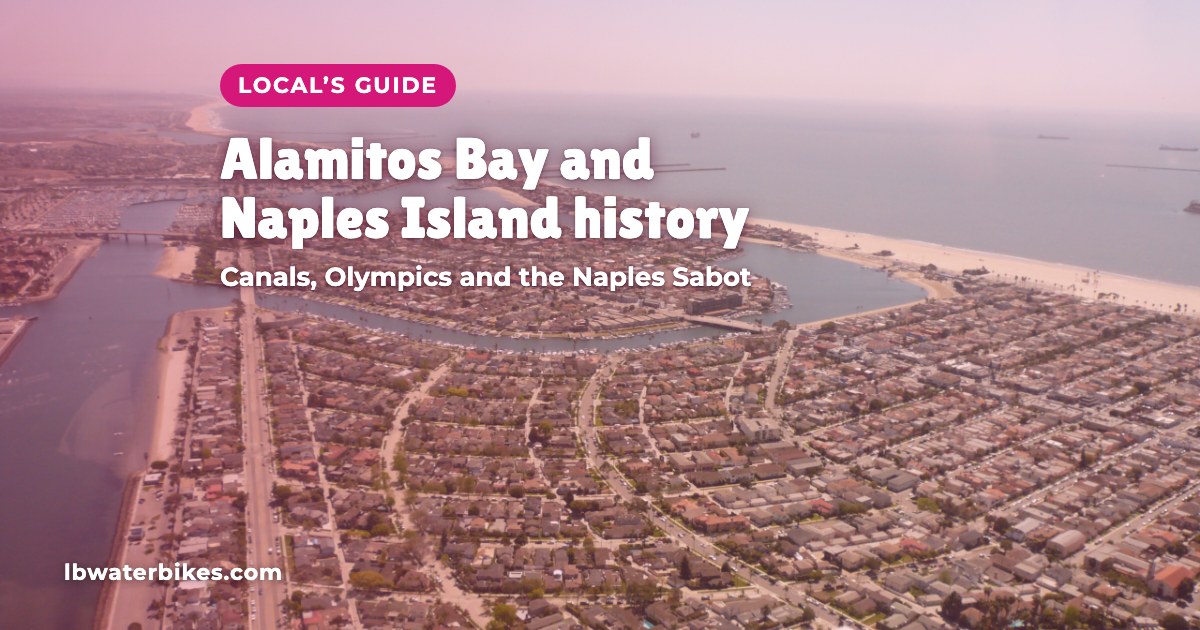
Alamitos Bay and Naples Island look as if they have always been here: palm trees, arching bridges and homes right on the water. In fact, almost all of it was built by hand over the last 120 years, starting with a marsh and one developer’s sketch. Here is how this corner of Long Beach came to be.
Little poplars and a marsh
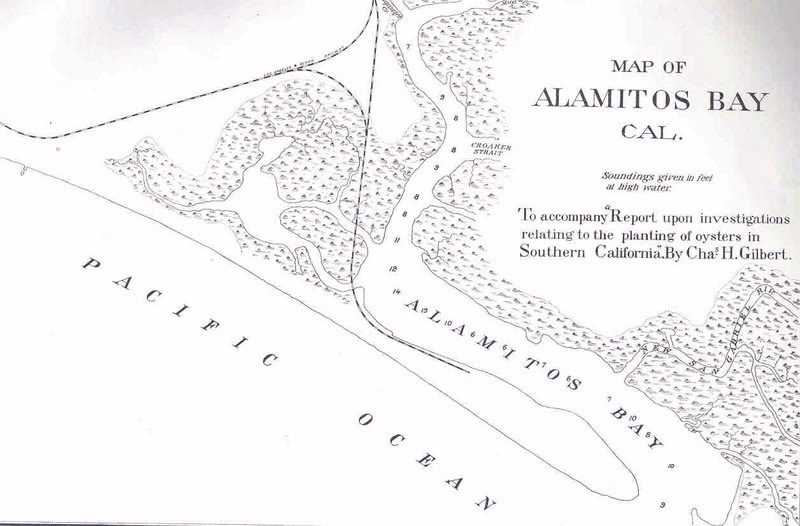
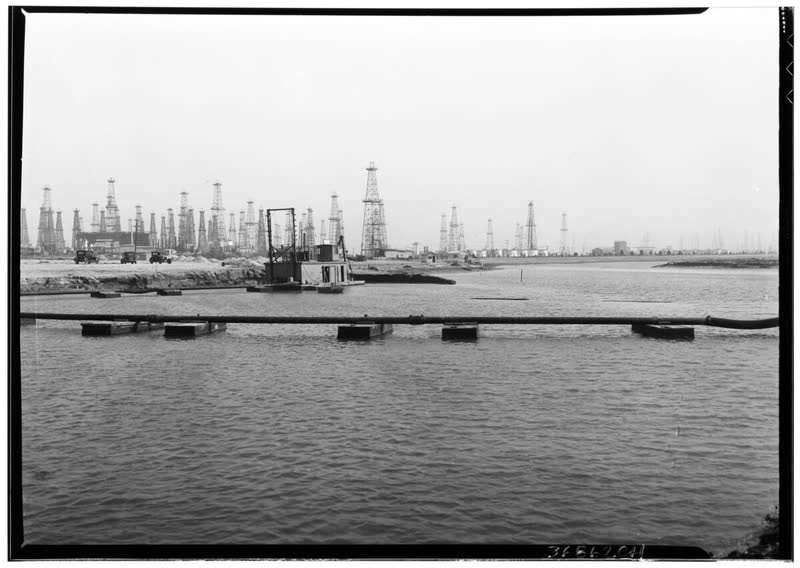
Alamitos Bay is an inlet of San Pedro Bay, and its name comes from the Spanish for “little poplars.” Where the neighborhood of Naples sits today, there was once marshland, cut through by sloughs. The shoreline you see now is largely the work of more than a century of dredging and landfill.
Arthur Parsons dreams up Naples
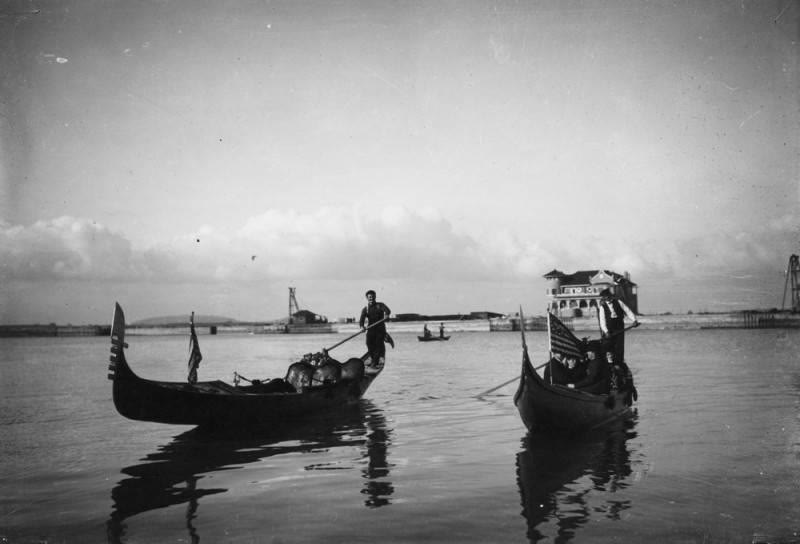
That marsh is where Naples begins. The story goes that developer Arthur M. Parsons first pictured the neighborhood while duck hunting there: he climbed onto a shack roof, looked out over the sloughs and sketched an island village with a Venetian flair on the back of an envelope. Around 1903 he raised $500,000 from investors and bought the marshland from the Alamitos Land Company. His dream was a Venice-style neighborhood of canals and gondolas, much like Abbot Kinney’s “Venice of America” up the coast, and early promotions promised gondoliers gliding under high arching bridges, “like those in the waters of the Adriatic.”
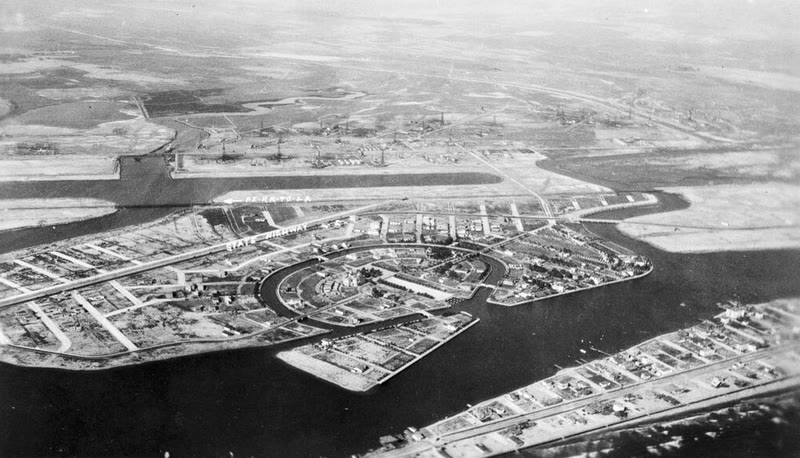
Turning a sketch into dry land took serious engineering. Construction started in August 1905 and needed about 13,000 feet of concrete bulkhead and 300,000 cubic yards of dredging and fill. On July 6, 1906, the first lots went on sale for $900 to $4,000.
Huntington, the Red Car and a growing island
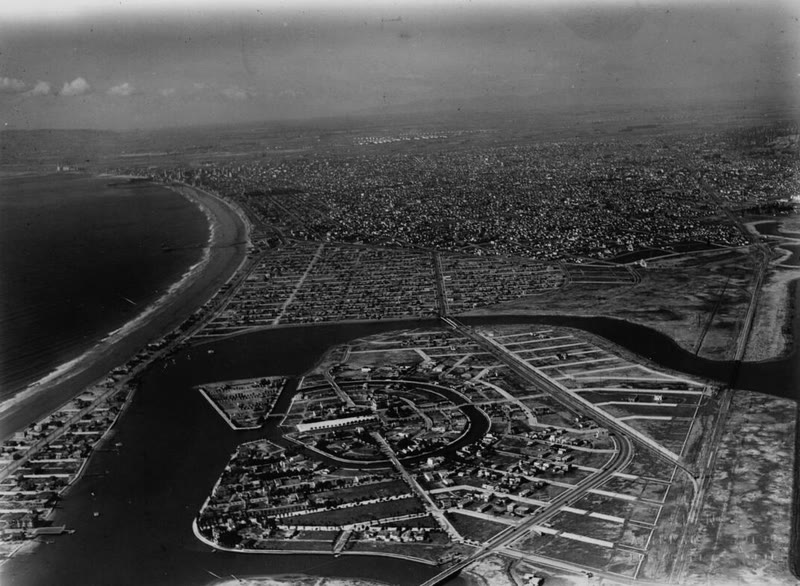
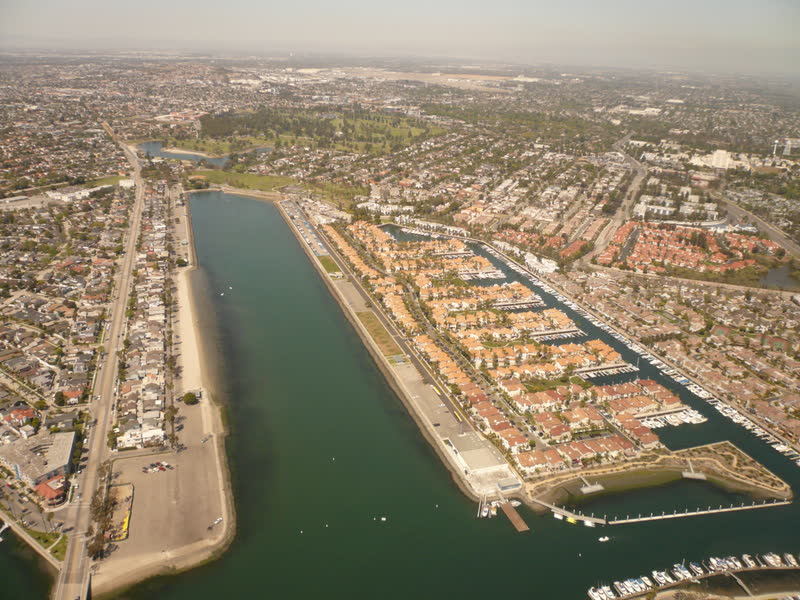
The timing was hard. Sales slowed after that year’s San Francisco earthquake, and in 1907 Parsons sold the venture to Henry Huntington’s land company. Getting here in those days meant taking the trolley: from 1904 to 1950, Naples was served by the Pacific Electric Balboa Line, part of the Red Car system that linked beach towns across Southern California (read more in our post on the railroad that brought people to Naples). Building continued into the 1920s, and the result is the Naples we know today: three islands inside Alamitos Bay, divided by canals that open into the bay.
Gondolas on the canals
Gondolas were part of the plan from the start. Parsons’ Naples Land Company promised that “gay gondoliers will propel their crafts” through the canals and under the arching bridges, and gondolas were first introduced to the area in 1903 as the islands were developed into a Venetian-style neighborhood. The tradition never left: The Gondola Getaway, founded in 1982, still rows gondolas through the Naples canals (gondolagetawayinc.com).
The hotel that never opened
As homes went up around the canals, Naples nearly got a grand hotel as well. In 1909, Almira Parker Hershey built the Hotel Napoli near the fountain park at the center of Naples, a four-story Mission Revival building with twin cupolas and rooftop pavilions for viewing the bay. Curiously, in all the years she owned it, from 1909 to 1927, she never opened it as a proper hotel. According to Naples historian Stan Poe, it did not come into its own as a hotel until it was sold in 1930. It was torn down in 1959, and apartments stand on the site today.
Marine Stadium and the 1932 Olympics
While Naples filled in, the water next door was being reshaped too. Land was purchased in 1923, and a long, straight channel was dredged off Alamitos Bay. It became Marine Stadium, built for the rowing events of the 1932 Olympic Games in Los Angeles and known as the first manmade rowing course in the United States. It was wide enough for four crews to race side by side, which cut down on extra heats.
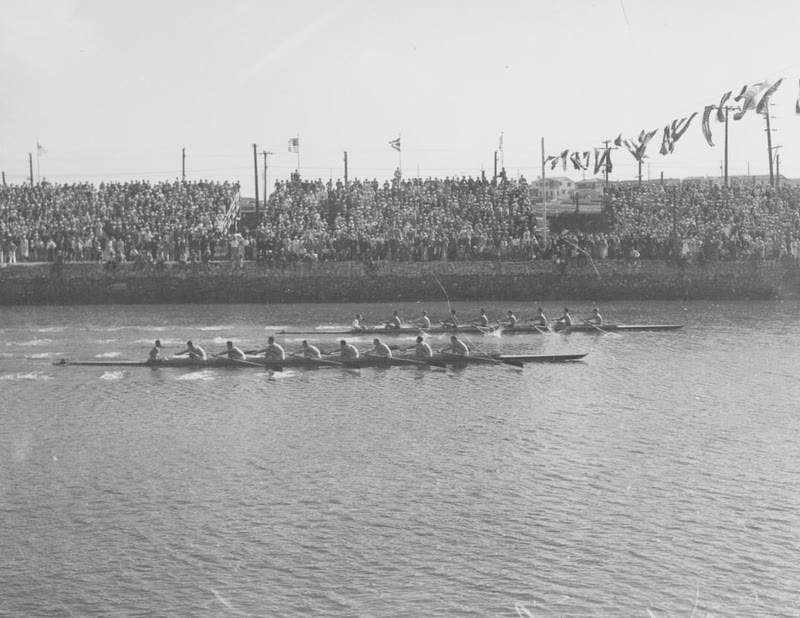
The Olympics kept coming back. Marine Stadium later hosted U.S. Olympic rowing trials in 1968 and 1976, and the women’s trials in 1984, and it is set to host rowing and canoe sprint again for the 2028 Los Angeles Olympics, on a 1,500 meter course because of a bridge built across the channel in 1955.
The Naples Sabot: a Long Beach original
After World War II, Naples gave the sailing world a boat of its own. The Naples Sabot was designed by Roy McCullough and R.A. Violette in Naples, with the first two built in Violette’s garage during the war and plans released in 1946. It is an 8-foot sailing dinghy with a leeboard, and it became the traditional first boat for young sailors from Long Beach to San Diego. So if you see kids sailing tiny, boxy boats around the bay, you are looking at a piece of local history: Sabot races are still sailed on Alamitos Bay today.
The Frank House: Case Study House #25
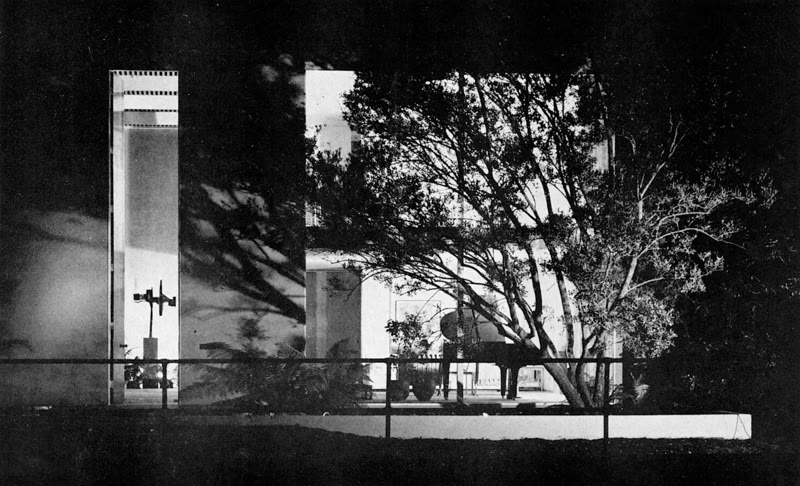
By the 1960s, modern architecture had reached the canals too. On the Rivo Alto Canal stands the Frank House, also known as Case Study House #25, part of the Case Study House program that Arts & Architecture magazine launched in 1945 to commission experimental modern homes, mostly in Southern California. Edward Killingsworth designed it with Jules Brady and Waugh Smith for Edward Frank, whose Frank Bros. store on Long Beach Boulevard was known for mid-century modern furniture, and it was completed in 1962. The house turns its face to the water: its entrance is a 17-foot-tall front door of seamless aluminum, designed for guests arriving at the home’s 40-foot dock, and a 25-foot olive tree was moved in to soften the canal side. It won an Award of Merit from the American Institute of Architects and Sunset magazine in 1963, and in 2024 the City of Long Beach designated it a historic landmark.
Lights on the water
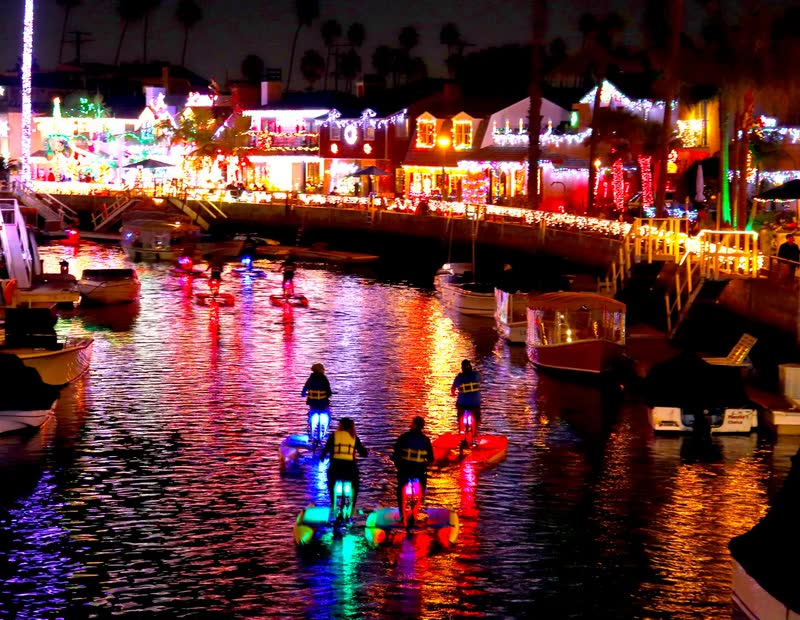
The holidays have been a big deal here for generations. The Naples Christmas boat parade has been held since 1946, and every December the homes along the canals light up, making it one of the most festive sights in Long Beach. Out on the bay, look for the floating Christmas trees: known as “Trees in the Bay,” the tradition dates to 1949, and in 2024 the trees began running partly on solar power.
Naples today
A little over a century after Parsons bought a marsh, Naples is one of the most valuable neighborhoods in Long Beach. The first lots sold for $900 to $4,000 in 1906; in 2023, all ten of the most expensive home sales in the city were waterfront or canal homes in Naples, selling for $4 million to $8.5 million, and one architect-designed home on the Rivo Alto Canal was listed at $4.5 million that year.
The history you can still see
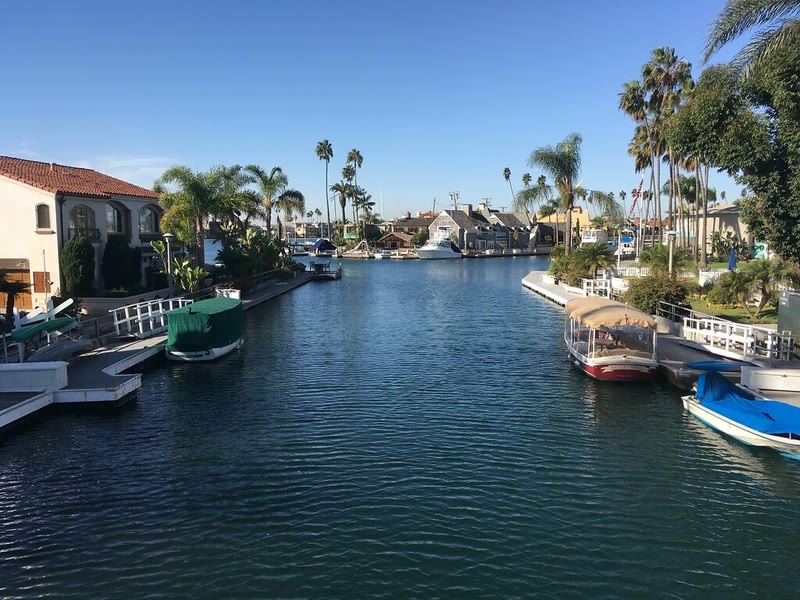
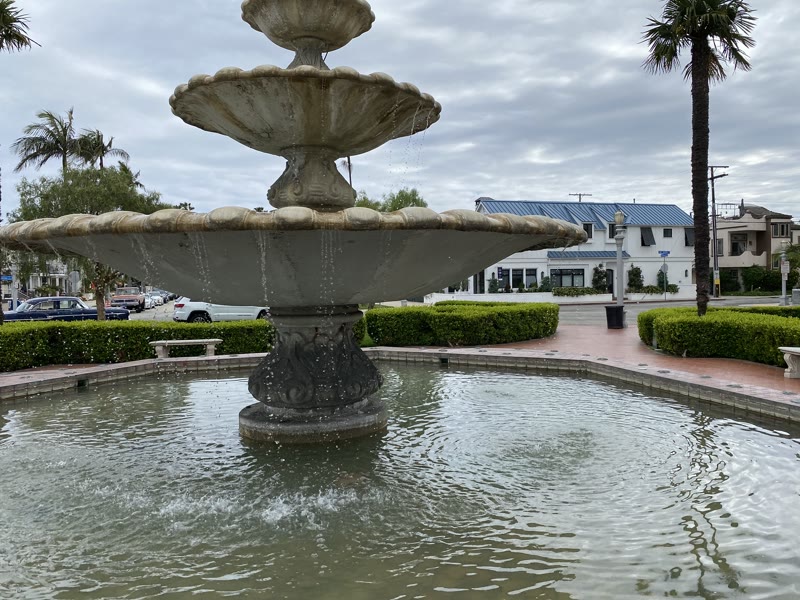
Much of this story is still visible today. The Naples seawalls were rebuilt in 1938 after the 1933 Long Beach earthquake, and the bridges still arch over the canals. At the center of the island is the round park the Belmont Shore Development Company donated to the city in 1933; its three-tiered fountain, La Bella Fontana di Napoli, was dedicated on February 20, 1971, and renovated in 2008 by city staff with help from the Naples Garden Club. Nearby you can still trace the long, straight channel of Marine Stadium and spot Sabots racing on the bay.
Hydrobike day and sunset rides stay on Alamitos Bay, the 2-Hour ride goes into the Naples Island canals, and in December the Christmas Lights rides pass the lit-up homes. For more to do around Naples and the bay, see our guide to things to do on the water and Plan Your Visit.
Featured image: Aerial photo by Darkest tree, Wikimedia Commons, CC BY-SA 4.0; cropped with text added by Long Beach Waterbikes, shared under the same license.
Sources
Los Angeles Times: A Stroll Along ‘Italian’ Canals in Long Beach, Robert Pierson (Dec 20, 1986); Long Beach Post: The rise and fall of the Naples Hotel, Tim Grobaty (July 8, 2022), quoting Naples historian Stan Poe; PBS SoCal Lost LA: From Marshland to Italian Village.
The Gondola Getaway, “Why Us,” gondolagetawayinc.com/why-us/ (founding year and 1903 gondola introduction).
Long Beach Post: Naples homes top the list of priciest Long Beach sales (Dec 2023)
Long Beach Post, “The Trees in the Bay will be (partly) powered by solar this year,” John Donegan, November 29, 2024 (cited in Wikipedia, “Naples, Long Beach”).
Wikipedia: Naples, Long Beach, California; Wikipedia: Alamitos Bay; Wikipedia: Long Beach Marine Stadium; Wikipedia: Naples Sabot.
Long Beach Post: This Long Beach home with a 17-foot-tall front door is about to become a historic landmark, Jacob Sisneros (Nov 11, 2024); Arts & Architecture: Case Study House No. 25 by Killingsworth, Brady, Smith and Associate (October 1962); Wikipedia: Case Study Houses; PCAD: Case Study House #25, Naples, Long Beach; City of Long Beach Ordinance ORD-24-0021 (historic landmark designation, 82 Rivo Alto Canal).
City of Long Beach Parks, Recreation and Marine: La Bella Fontana di Napoli.