
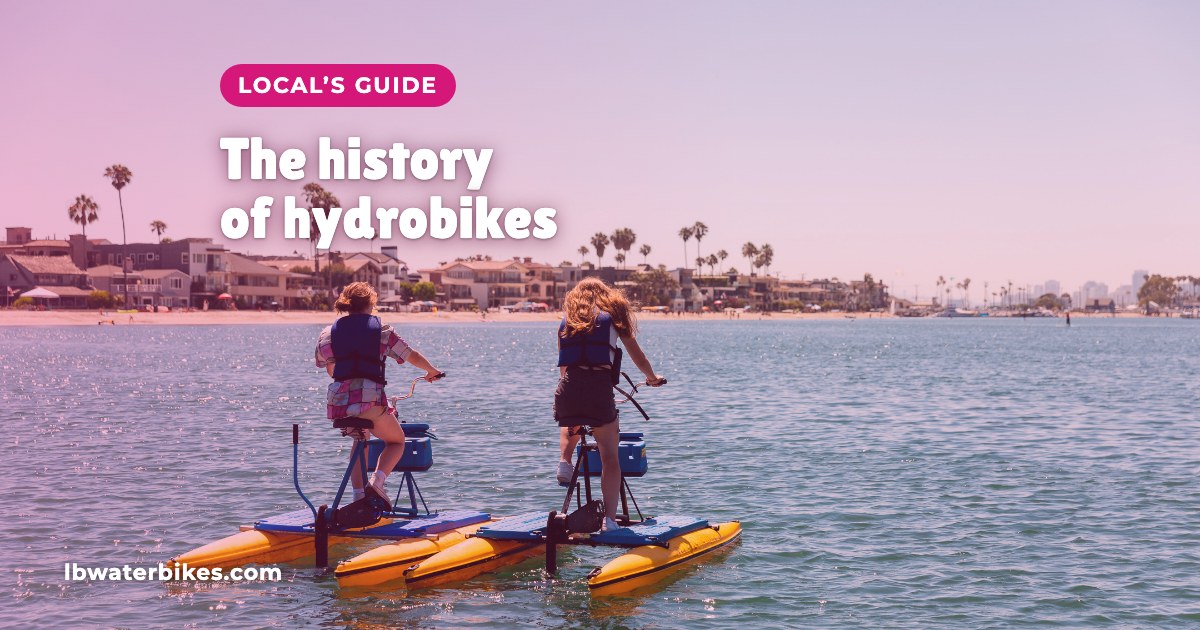
Riding a bicycle across the water sounds like a modern invention, but the idea is more than 150 years old. Here is how the pedal-powered boat went from a 19th-century curiosity to the hydrobikes you see on Alamitos Bay today.
A very old idea: the water velocipede
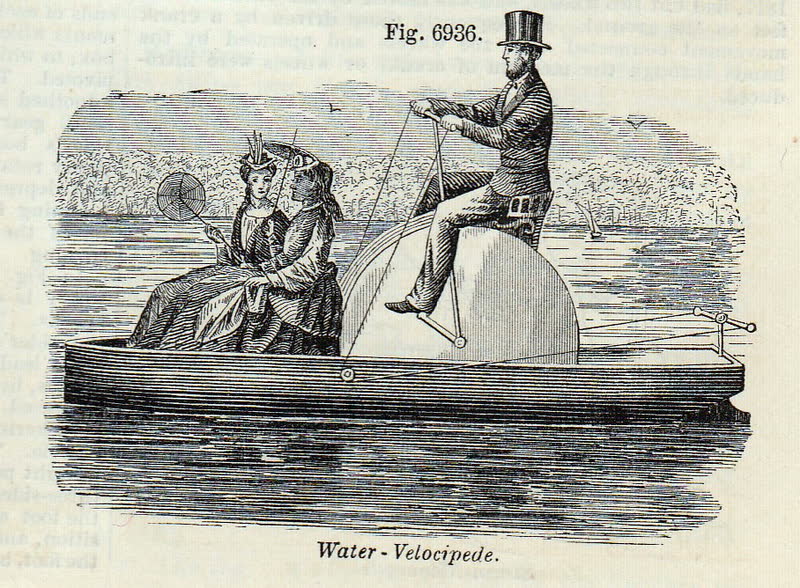
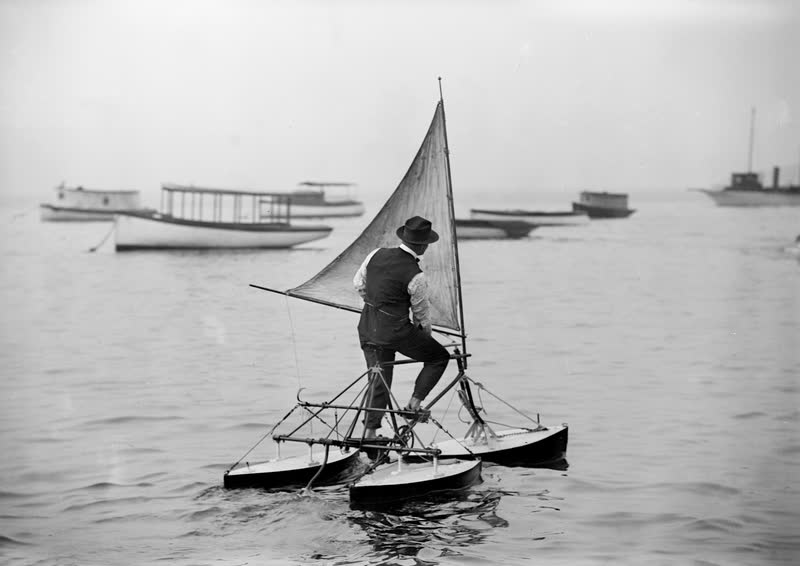
People were dreaming up pedal-powered boats more than 150 years ago. In the 1870s the idea was known as a water velocipede, and by the late 1890s the name hydrocycle was in use. An 1898 report even described a “Hydrocycle versus Skiff Race,” so racing on pedal power is not a new thing either.
The basic recipe has stayed the same ever since: the rider turns a crank with pedals, just like on a bicycle, and that power goes to a propeller. Two or more pontoons, or a single board, keep the whole thing floating. Designs vary from upright seats to reclined ones, and some carry riders side by side or one behind the other.
The modern hydrobike
The hydrobikes you see on the bay today come from Hydrobikes, a company now based in Humboldt, Iowa. The hydrobike was invented around 1990 by Ray Buresch, an aeronautical engineer from the Plymouth, Minnesota area, where the company got its start, and today Hydrobikes are ridden in 74 countries, at state parks, resorts, YMCAs and rental spots like ours.
Early on, Hydrobikes got a memorable test. On July 4, 1994, riders Steve Anderson and Ken Rogers set off from the Gulf of Mexico and pedaled Hydrobikes up the Mississippi River all the way to St. Cloud, Minnesota, going through every lock and dam on the way. Hydrobikes tells the story here. For its first 25 years the company grew quietly from small-town Minnesota on word of mouth. In 2014, with Ray Buresch as CEO and a new factory in Humboldt, Iowa, Hydrobikes set out to take the Hydrobike global. As he put it then, the Hydrobike was “one of the best kept 25 year old secrets on the planet.” He passed away in 2019 at age 83.
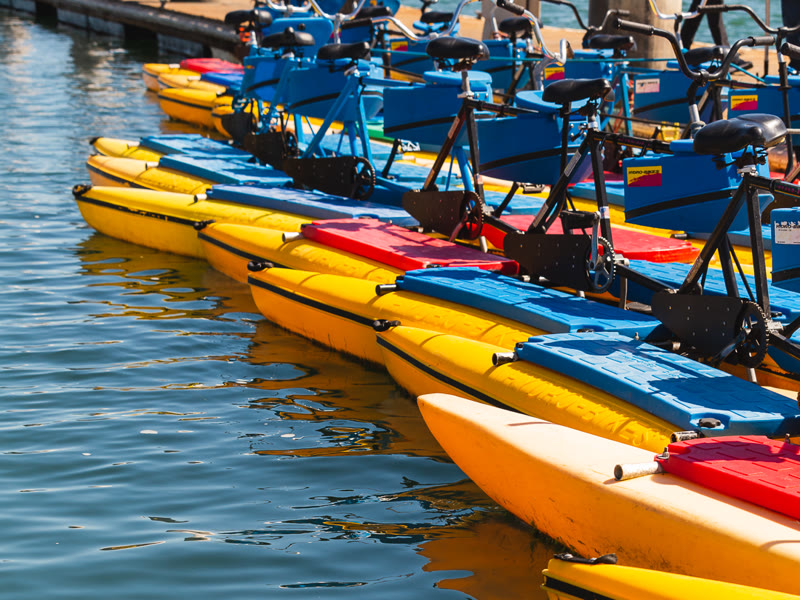
A few smart design choices make a hydrobike feel so natural on the water:
- Canoe-style pontoons. Hydrobikes says its pontoons were developed by a professional canoe designer for buoyancy, speed and handling. They are seamless molded polyethylene, tough enough for daily rides.
- A propeller you pedal. Your pedaling turns a 12-inch propeller through a sealed drive train that holds up in salt water. At an easy pace you cruise around 4 to 6 miles per hour.
- Steering up front. A front rudder steers the hydrobike, so it turns much like a bike.
- Made for shallow water. The drive works in less than a foot of water and pivots up and over rocks or sand, which is why a hydrobike can pull up to a beach without damage.
- Room for your stuff. Built-in storage and a cup holder ride along with you.
Put it all together and you get something that is both new and familiar: you sit up high, you pedal like a bike, and there is no balance to learn. See the full lineup on the Hydrobikes website.
Hydrobikes on Alamitos Bay
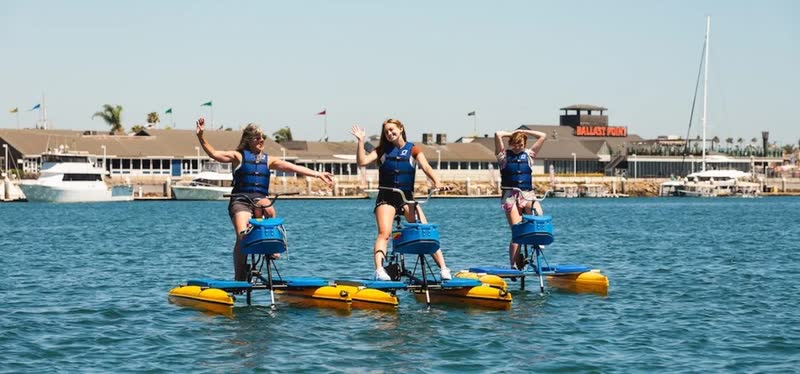
People have been renting hydrobikes on Alamitos Bay since 2010. The bay is flat and protected, which suits a boat that works in shallow water and pulls up onto sand. Long Beach Waterbikes is on the Hydrobikes rental locations list, at our dock in front of Ballast Point Brewery.
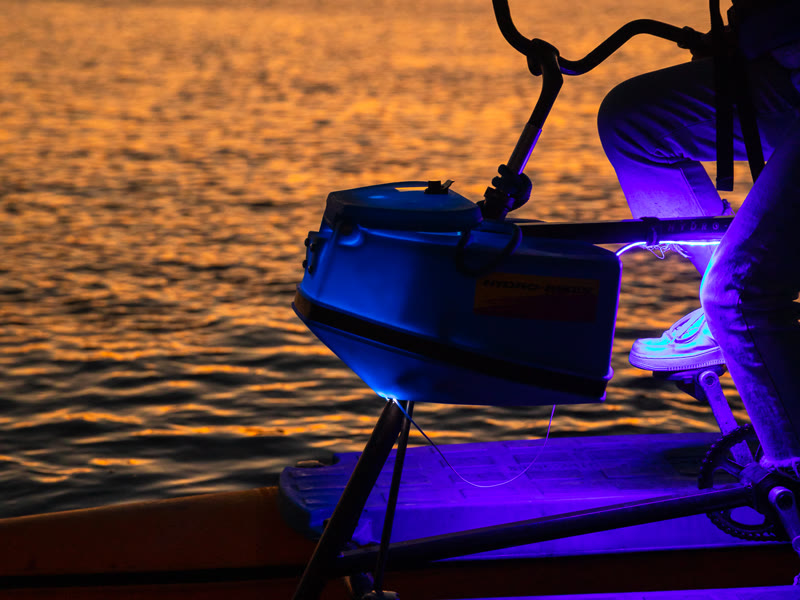
Rides on the bay run as day, sunset, glow and 2-Hour rides. For more about the bay, from kayaks and paddle boards to fishing, see our guide to things to do on the water in Long Beach.
Sources
Hydrobikes (homepage); Hydrobikes Explorer specifications; Hydrobikes contact page (Humboldt, Iowa); Hydrobikes rental locations; Wikipedia: Water bicycle.