
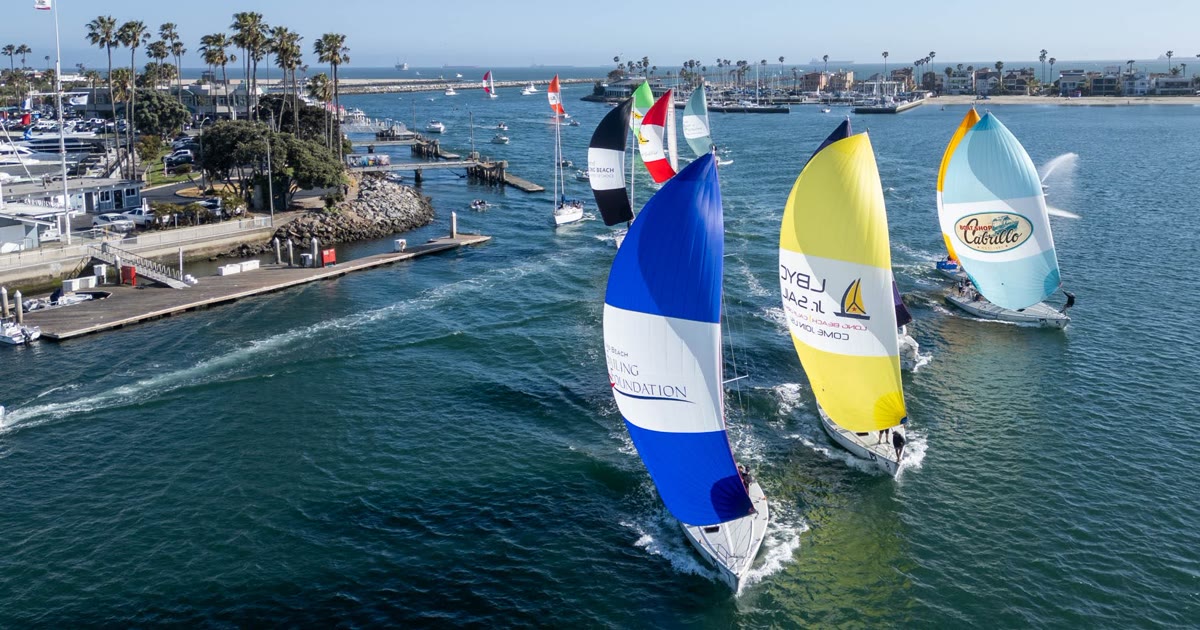
Spend any afternoon on Alamitos Bay and you will see them: little Sabots zigzagging behind a coach boat, a line of keelboats heading for the jetty, kids in life jackets learning to tack. Behind almost all of it are the yacht clubs that line the bay. Some are nearly a hundred years old, one started at a Navy base, and together they have turned this quiet corner of Long Beach into one of the best known sailing spots in the country. Here is a little history of each, and how you can get involved even if you have never owned a boat.
Alamitos Bay Yacht Club: the oldest on the bay
Alamitos Bay Yacht Club sits at the end of the Peninsula on Ocean Boulevard, and it came first. Twelve local sailors and boat builders founded it on August 14, 1924, before most of the marina we know today existed. The club organized formally in 1926 with Richard L. Russell Sr. as its first commodore, and it celebrated its 100th birthday in 2024.
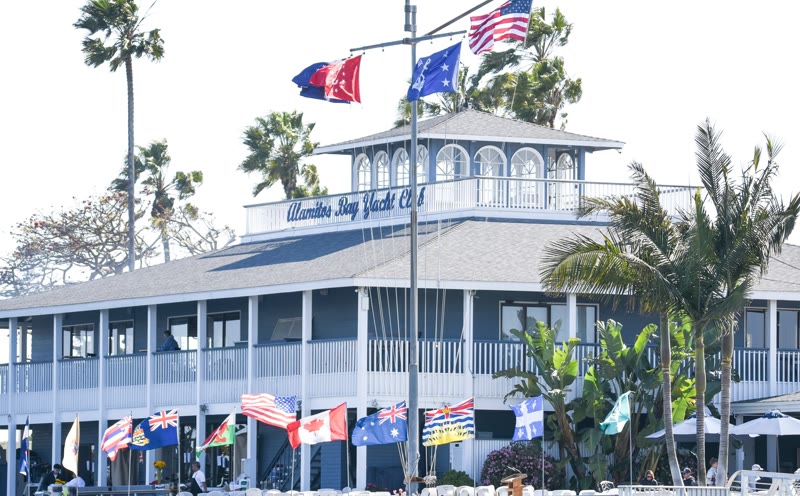
Over that century ABYC has hosted world championships in classes from the Finn to the International 14, plus the 1991 World Women’s Sailing Championship. Some of the biggest names in American sailing have sailed under its burgee. John Biby Jr., an ABYC member, won Olympic gold in the 8 Metre class at the 1932 Los Angeles Games. Peter Barrett won Olympic silver in 1964 and gold in 1968 and later led North Sails. Allison Jolly won the first-ever Olympic gold in the women’s 470 in 1988, the same year Long Beach native John Shadden took bronze in the men’s 470. Sarah Glaser added a 470 silver in 2000, and Pete Melvin, a National Sailing Hall of Fame member, helped design the Nacra 17 catamaran that Olympians race today. ABYC also leads the Long Beach Olympic Classes Regatta, which has run since the early 1960s and drew more than 200 athletes from 42 nations in 2025.
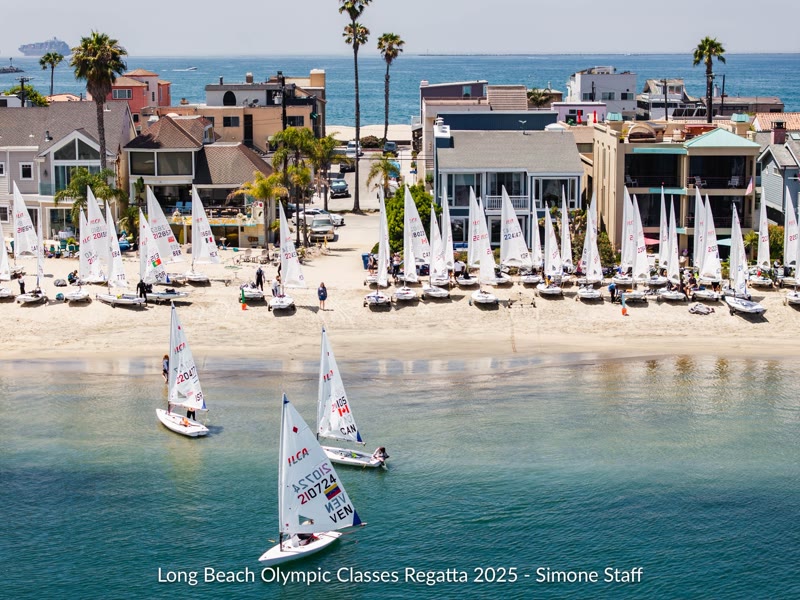
For the rest of us, ABYC runs junior sailing in Sabots, Optimists, FJs and Lasers, plus learn-to-sail programs for kids and adults. The Alamitos Bay Sailing Foundation, at the same address, funds scholarships so young sailors can stay on the water.
Long Beach Yacht Club: home of the Congressional Cup
Long Beach Yacht Club began in 1929, when a proposed powerboat race from Long Beach to San Francisco brought local boaters together. Architect Daniel M. Callis became its commodore at a meeting of 125 people at the Pacific Coast Club. The first clubhouse stood west of downtown at the end of a long boardwalk; the club moved to its present home on Appian Way, on Naples Island, in 1960.
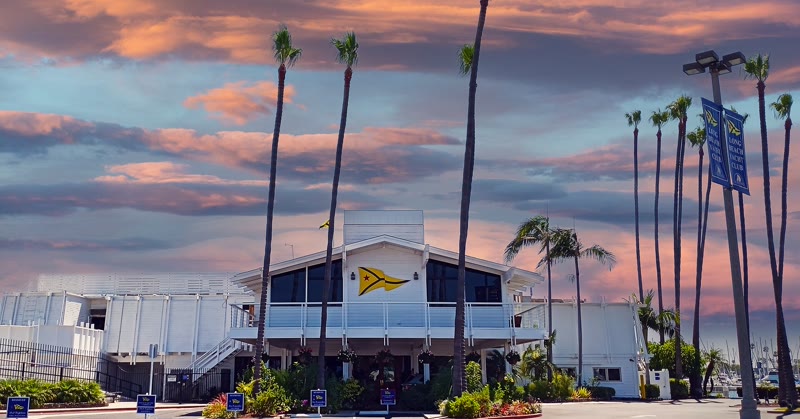
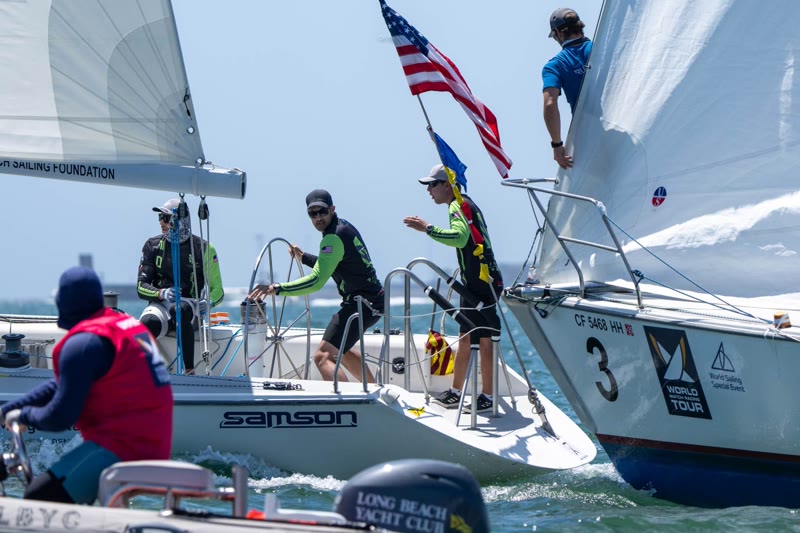
Five years later LBYC created the event it is best known for. The Congressional Cup started in 1965 and takes its name from a charter granted by Congress. It is a match race: two identical boats go head to head, with umpires on the water making calls in real time, an idea the Cup helped pioneer. Sailors call it the gateway to the America’s Cup, and the winners list shows why. Dennis Conner, Ted Turner and Bill Ficker all won the Congressional Cup and also won sailing’s oldest trophy, the America’s Cup. Taylor Canfield has won the Congressional Cup five times, tied for the record. The racing happens in the ocean just west of Belmont Pier, and watching is free from the pier and the bluffs along Ocean Boulevard. The 62nd Congressional Cup is set for April 28 to May 2, 2027, and since 1980 the club has also run the Ficker Cup, named for Bill Ficker, as the qualifier for it.
In 1965 the club also started the long-distance race from Long Beach to La Paz, Mexico, which later moved its finish to Cabo San Lucas.
LBYC runs youth sailing year round, from Sea Otters (ages 5 to 7) up to high school and race teams, with registration open for each season. Its outreach work with the Long Beach Sailing Foundation brings Boys and Girls Club kids, middle schoolers, first responders and active duty military out for a day of sailing. Each June, LBYC and ABYC co-host Long Beach Race Week offshore.
Seal Beach Yacht Club: the one that lives in Long Beach
Here is a fun bit of local trivia: Seal Beach Yacht Club is not in Seal Beach. It sits at 255 N. Marina Drive in Long Beach, overlooking the Alamitos Bay Marina. Nine local businessmen organized it in February 1961, led by naval architect Daniel M. Callis, the same name you will find at the founding of Long Beach Yacht Club three decades earlier. They named it after the year-round sailing they loved in Seal Beach, met for years at the Edgewater Inn, and settled on Marina Drive in the early 1970s.
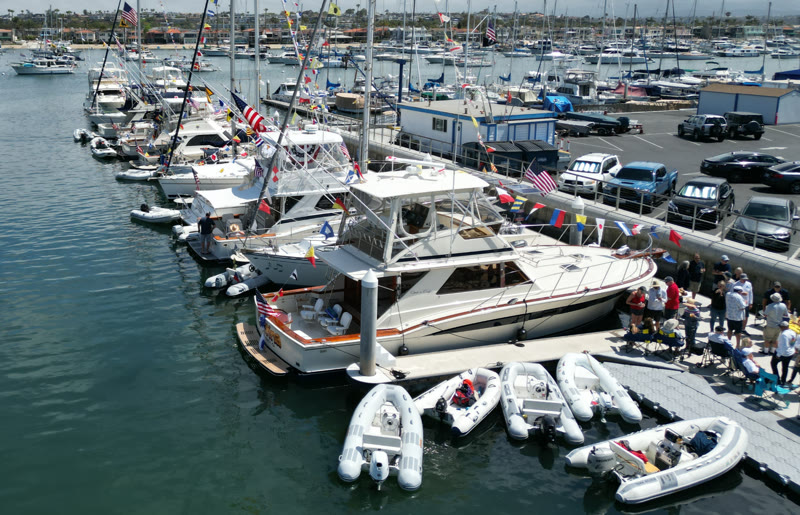
The club has some great stories. It hosted pre-Olympic trials with sailors from 22 nations in 1982, and in November 1987 the America’s Cup itself paid a visit, arriving from San Diego under guard in a stretched limousine. Members race Thursday nights from May through September and cruise monthly most of the year.
The juniors program is open to non-members, ages 7 to 17, with spring, summer and fall sessions, which makes it one of the easiest ways for a local family to get a kid into sailing.
Navy Yacht Club Long Beach: a club born at a Navy base
Navy Yacht Club Long Beach started in the fall of 1967 at Naval Station Long Beach, organized by the port services officer, Lieutenant Commander John P. Larson. The Navy’s recreation fund gave the club its first boats: four 25 foot Coronados and ten smaller boats. The naval station closed in 1994, but the club carried on, and today its clubhouse sits on the water at 223 N. Marina Drive.
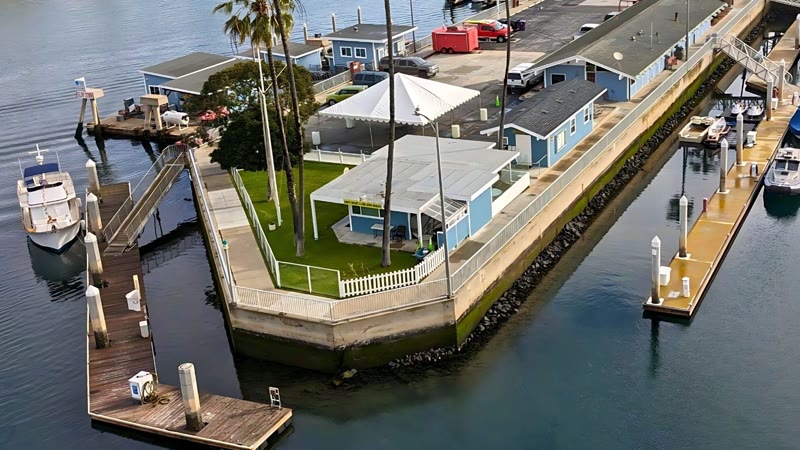
The club has always had a holiday streak. In 1986 it sponsored its first Christmas Parade of Lights for the crews of Navy ships in port, and it has since been part of veteran-focused events on the bay, including the Navy Day Regatta, which it started in 1971. The club welcomes veterans, active duty, Defense Department employees, Coast Guard Auxiliary, law enforcement and fire, and others with a member sponsor. Tuesday “Salty Sailors” races and Friday potlucks keep the clubhouse busy.
Little Ships Fleet: the club that made racing fair for everyone
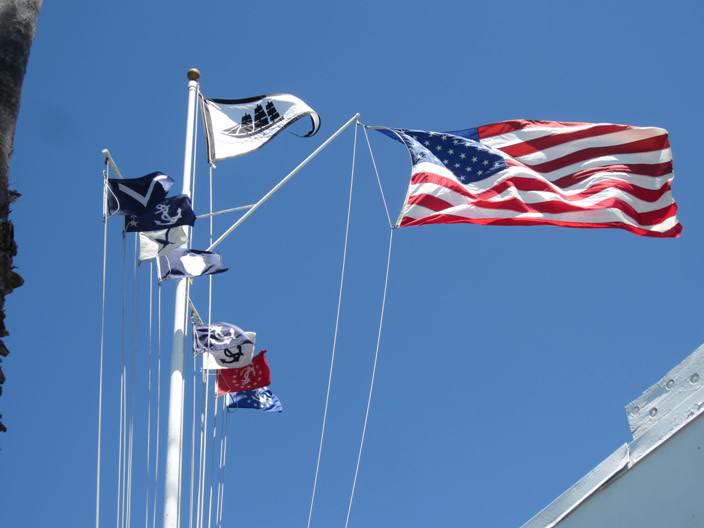
Little Ships Fleet Yacht Club is the one most locals have never heard of, and it has one of the best stories on the bay. Back in 1937, sailboat races in Southern California were mostly for class boats, fleets of identical boats that could race each other head to head. If you owned a one-of-a-kind boat, you had no fair way to race it. Six local sailors decided to fix that and started a racing and cruising club for owners of non-class boats in the Long Beach area. They named it after a similar group in Seattle, the Little Ships Fleet of the Great Northwest, and “little ships” fits: members sail boats from 14 to 45 feet, not grand yachts.
The fix was a handicap rating, a number that tells how fast a boat should be, measured in seconds per mile. After a race, each boat’s time is adjusted by its rating, so a small, slow boat can beat a big, fast one if it is sailed better. Little Ships ran its own ratings, and in the late 1950s that made it the key piece of something much bigger. Forty of its boats held both the Little Ships rating and the older arbitrary handicap rating, which let organizers line the two systems up and rate every boat on one scale. Little Ships members sat on the founding committee, and in 1959 skippers formed the Pacific Handicap Racing Fleet. Today it is called the Performance Handicap Racing Fleet, or PHRF, and more than 60 fleets across North America use it today.
Little Ships still calls itself a blue collar, not blue blood, yacht club. It has no fancy clubhouse, just a storage shed at the Alamitos Bay Marina, and holds its events at the shed or at other clubs on the bay. Members race in the Long Beach Harbor series, finish with barbecues, cruise to Catalina and other clubs, and welcome sail, power and even no-boat members. The club’s own advice: join before you buy your dream boat.
Also on the bay: Cerritos Bahia Yacht Club
If you hear someone mention a “Bahia” yacht club on Alamitos Bay, they mean Cerritos Bahia Yacht Club, at 6291 E. Pacific Coast Highway in Long Beach. Its members are mostly power boaters, with a few sailors in the mix, and the clubhouse has a dining area and bar. The club runs a junior program and hosts charitable events that support outdoor education and safe boating. The marina next door, Cerritos Bahia Marina, sits on Alamitos Bay and is run by the City of Long Beach. It’s not to be confused with Bahia Corinthian Yacht Club, which is down the coast in Newport Beach.
Why the bay works so well for sailing
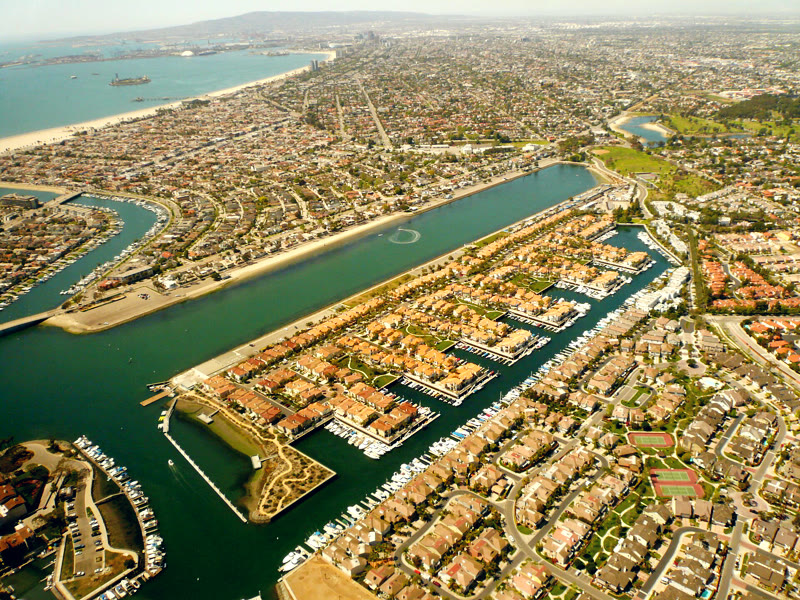
Alamitos Bay is protected by offshore breakwaters, with channels, canals and seven marina basins, and it is only a short sail to open water and steady afternoon wind. That combination of calm water inside and real wind outside is why it has hosted Olympic sailors for decades, and why Long Beach will host sailing for the 2028 Olympics, off Belmont Shore. Just up the bay, Marine Stadium was built out for the 1932 Olympic rowing events and will host rowing and canoe sprint in 2028.
Want to try sailing yourself? Besides the club programs above, the city’s Leeway Sailing and Aquatics Center on Ocean Boulevard has offered sailing on the bay since 1929, with Sabot classes from age 8 through adult. Across the bay on Appian Way, near Mother’s Beach, the Long Beach Sea Base runs sailing, kayaking and powerboating programs for Scouts, plus a summer aquatics camp for kids in grades 2 to 5 that is open to all, Scout or not.
A note for hydrobikers
If you are out on a hydrobike and come across a big group of sailboats, stay on the outside of the group. They are probably practicing or racing, and their course can change fast, so please do not ride into the middle of them. Give them room, enjoy the show, and you will both have a better day on the water.
Sources: Long Beach Parks, Recreation and Marine, Alamitos Bay Yacht Club (Wikipedia), John Biby (Wikipedia), Alamitos Bay Sailing Foundation, Long Beach Yacht Club, The Sailing Museum, Congressional Cup, Long Beach Post, Congressional Cup winners (Wikipedia), Sail-World (La Paz race), Seal Beach Yacht Club history, Navy Yacht Club Long Beach history, The Log, Southern California Yachting Association, PHRF of Southern California history, Little Ships Fleet Yacht Club, US Sailing, City of Long Beach (LA28, April 2025), Long Beach Sea Base, Leeway Sailing and Aquatics Center. Checked October 2026; programs, dates and fees change, so check with each club before you go. Photos are credited in each caption. Featured image: the 2024 Congressional Cup. Photo: Ian Roman / World Match Racing Tour, thecongressionalcup.com.