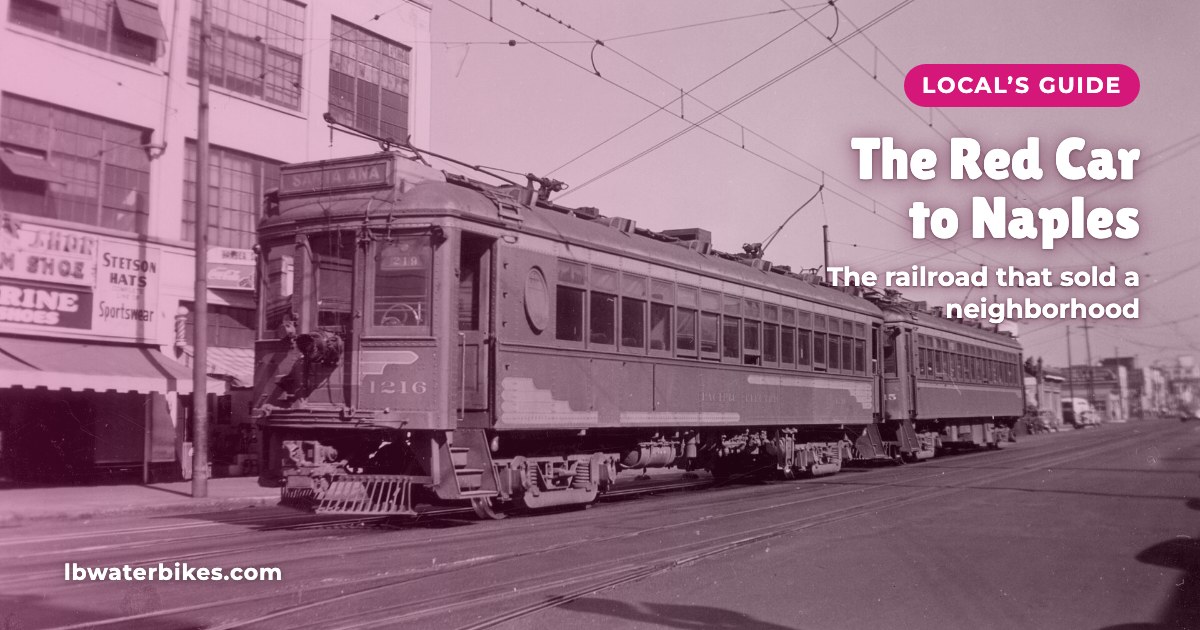
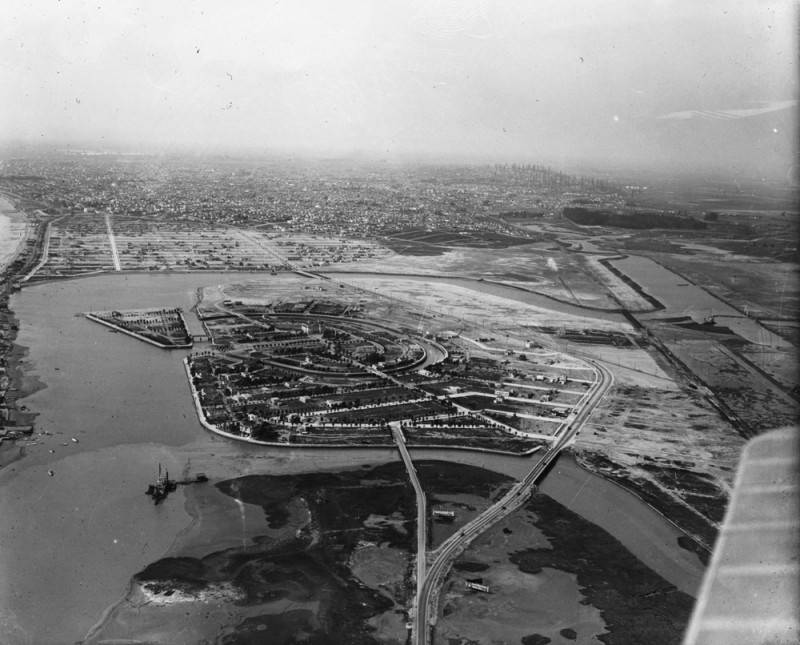
Before Naples had its bridges and canal homes, it needed a way to get people there. That came from the Pacific Electric Railway, the Red Cars, which ran right through Belmont Shore, Naples and Alamitos Bay on the way to the beach towns farther south.
Huntington’s Red Cars
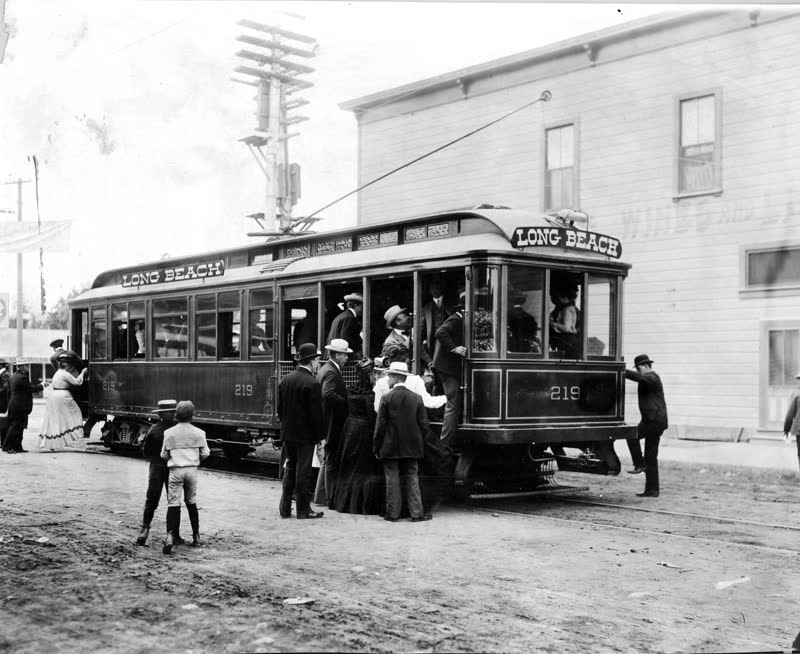
The Pacific Electric Railway was created in 1901 by railroad executive Henry E. Huntington and banker Isaias W. Hellman. Its electric streetcars were nicknamed the Red Cars, and by the 1920s it was the largest electric railway system in the world. Its first main project, the Long Beach Line from Los Angeles, opened on July 4, 1902.
A railroad that sold land
Streetcars were only part of the business. The real money for the investors was in supplying electric power to new communities and in developing and selling real estate. Huntington and his partners held significant stakes in the land companies developing Naples, Bay City (today’s Seal Beach), Huntington Beach, Newport Beach and Redondo Beach.
The Balboa Line through Naples
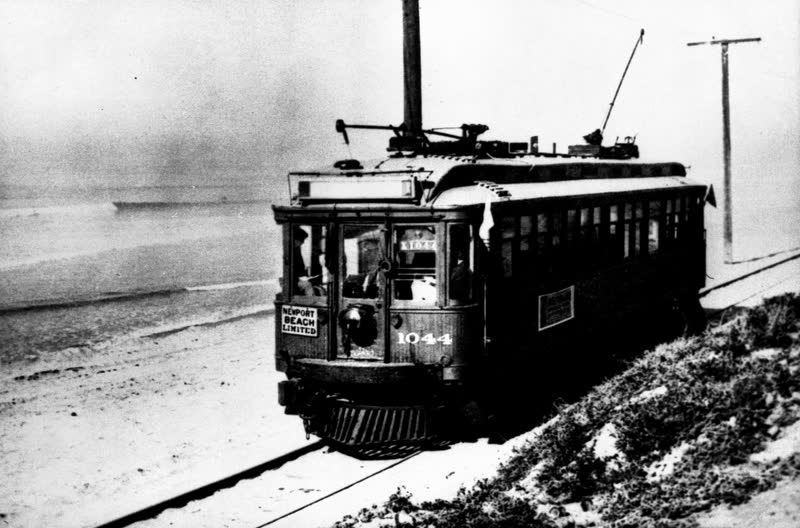
The line that served Naples was the Balboa Line. It opened to Huntington Beach on June 24, 1904, and reached the Balboa Peninsula on July 4, 1906. Cars ran from the Pacific Electric Building in downtown Los Angeles through Long Beach, then on through Belmont Shore, Naples, Alamitos Bay, Seal Beach, Huntington Beach and Newport Beach to Balboa. Stops near the bay included Zaferia, Alamitos Heights and Naples. The route was double track as far as Huntington Beach and single track beyond.
Naples was served by the line from 1904 to 1950, and construction of Naples itself began in August 1905, so the Red Cars were running past before the first canals were finished. In summer, riders could pay a 35-cent premium for the Commodore, a seasonal parlor car.
The end of the line
At its height the line carried more than 750,000 riders a year: 758,621 in 1914 and still 735,326 in 1922. After that, ridership fell as cars took over, down to just 55,390 riders in 1948, less than a tenth of its peak (Electric Railway Historical Association). The last passenger train on the Balboa Line ran on June 30, 1950. Freight kept moving for a while. Heading south, the Red Cars had run alongside Appian Way past Marine Stadium, then crossed Alamitos Bay and the San Gabriel River on three wooden trestle bridges and rolled into Seal Beach down the middle of Electric Avenue. The trestle over the river, the last link between Long Beach and Seal Beach, was removed in 1958 (Balboa Line history), and the route was formally abandoned in 1962. The original Los Angeles to Long Beach passenger line lasted the longest of the whole system, until April 9, 1961.
Traces you can still find
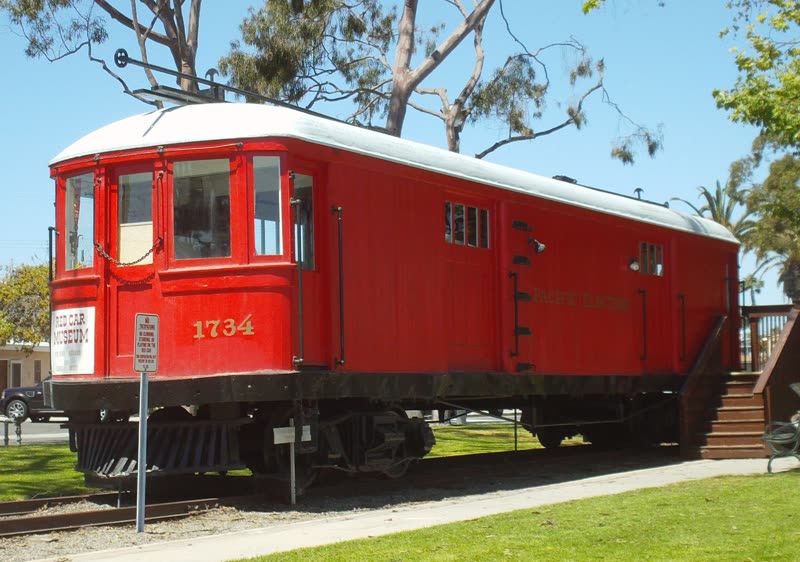
The old route did not disappear completely. The Long Beach Green Belt path occupies 11 acres of the former corridor, and from 1981 until 2021 the Seal Beach Historical Society ran the Red Car Museum out of a former Pacific Electric tower car along the pathway.
The neighborhood the Red Cars helped sell is still here, and it is worth a lot more than it used to be. When the first Naples lots went on sale on July 6, 1906, they cost $900 to $4,000 (Los Angeles Times). In 2023, all ten of the most expensive homes sold in Long Beach were waterfront or canal homes in Naples, selling for $4 million to $8.5 million.
There are plenty of ways to see it. On foot, sidewalks run along the canal seawalls, and small parks like Overlook Park and the fountain park at the center of the island have benches and views of the bay. On the water, you can rent an electric Duffy boat, a kayak or a paddle board nearby, take a gondola ride, or pedal the canals on a hydrobike 2-Hour ride or, in December, a Christmas Lights ride.
For the full story of how Naples and the bay were built, read our history of Alamitos Bay and Naples Island, and for the machines people ride on the bay today, the history of hydrobikes. Planning a day here? See Plan Your Visit and our guide to things to do on the water.
Pacific Electric car 219 photo: public domain via Wikimedia Commons. Huntington Beach Red Car photo courtesy Orange County Archives, CC BY 2.0, via Wikimedia Commons.
See a Red Car today
You can still visit a real Pacific Electric car about five minutes from Alamitos Bay. Car #1734, built in 1925, sits on a short piece of track on the Greenbelt at 800-840 Electric Avenue in Seal Beach, next to the Mary Wilson Library. It is owned by the Seal Beach Lions Club. For years it housed the Red Car Museum, which closed in 2021, and the car is still there to see on the Greenbelt.
Sources
Wikipedia: Pacific Electric; Wikipedia: Balboa Line; Wikipedia: Naples, Long Beach (parks; kayak, paddle board and hydrobike rentals near the island); Wikipedia: Red Car Museum (Seal Beach); Long Beach Post: Naples homes top the list of priciest Long Beach sales (Dec 2023); Long Beach Post: Naples seawall replacement (Dec 2024).
Car #1734 photo: Trackinfo, CC BY-SA 3.0, via Wikimedia Commons. Feature image: Pacific Electric Red Car 1216, Los Angeles, 1940s, public domain, via Wikimedia Commons (adapted with text and color).